
SharePoint 2016 for Your Public Website?
Back when Microsoft released SharePoint 2010, Redmond declared that its wide-ranging platform could also do web publishing, and ever since then the industry has debated its suitability as a WCM platform.
The debate was answered pretty firmly by RSG and other commentators: don't use SharePoint for public-facing, marketing-oriented sites. Still, enthusiasm lingered on, especially within enterprises that had made a strategic commitment to SharePoint. Some new (though sometimes bizarre) WCM features, yet in the ensuing years the platform fell even further behind.
Which brings us to SharePoint 2016, the latest update of the platform. Initially Redmond positioned SP 2016 as a pathway to Office 365, where it was placing much bigger investments. However, Microsoft had already killed SharePoint's WCM functionality in that cloud environment. In recent months, Redmond has put some renewed effort into the on-premise edition, but the SP 2016 die is cast and you won't find many WCM improvements of note.
So if you already license SP 2016, should you consider it for your public-facing digital initiative? You could read the 14-page SharePoint chapter in RSG's WCM vendor evaluation report, but I'll give away the ending now: No, you still don't want to use SharePoint for a public website, and maybe not even an intranet one.
.NET Alternatives
The good news is that you have many solid alternatives.
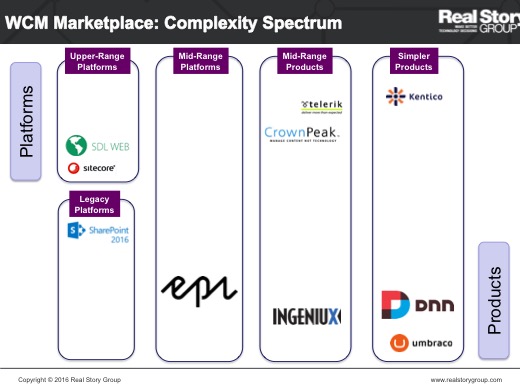
RSG covers nine other .NET vendors across the WCM market spectrum
As the chart above shows, you have access to a vibrant subset of .NET-oriented WCM vendors. They each have significant pros and cons, but it's fair to say they all surpass SharePoint circa 2016.
Curious about those pros and cons? Reach out to RSG to explore further.